Home / Services / Energy Audits
Energy Audits
Find the hidden energy waste costing you every day
Before you invest in solar or any upgrade, it pays to know exactly where your energy is going. A SolBuddy energy audit gives you a clear, jargon-free picture of what is draining your bills — and a prioritised plan for what to tackle first. Think of it as a health check for your home or business.
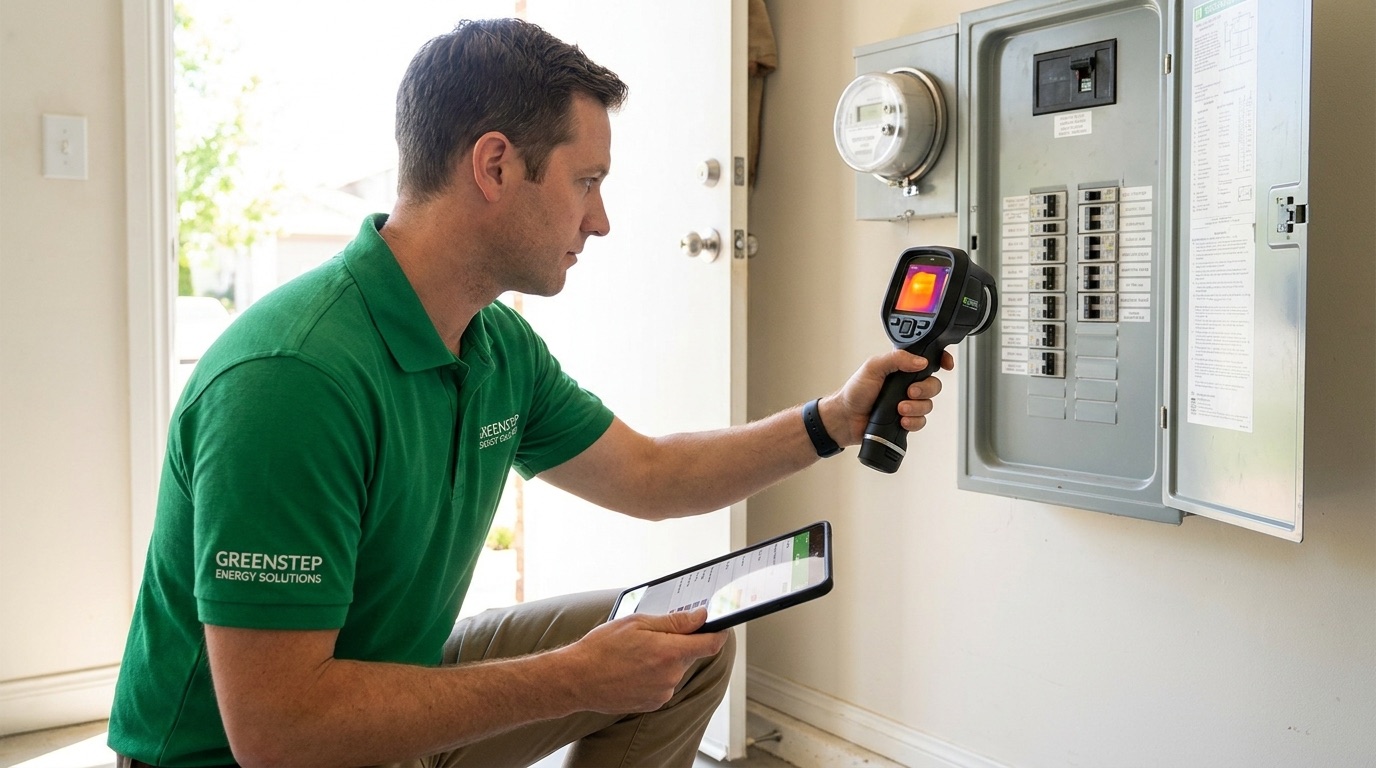
Most Australian households and businesses are paying more for energy than they need to. The culprit is rarely one big thing — it is usually dozens of small inefficiencies that have crept in over the years: old appliances running on standby, gaps in insulation, hot-water systems working twice as hard as they should, and lighting that eats power around the clock. An energy audit shines a light on all of it.
At SolBuddy, our auditors are not here to sell you the most expensive solution. We are here to help you understand your building, rank your opportunities by return on investment, and let you decide what to act on first. Sometimes the biggest wins cost nothing at all — just a change in habit or a setting on an existing appliance.
What actually happens during an energy audit?
Our auditor visits your property with a kit of diagnostic tools: thermal imaging cameras that reveal where heat escapes through walls and ceilings, power loggers that measure exactly how much electricity each circuit draws, and a whole-home or whole-building energy model that ties everything together. We also review 12 months of your bills to understand your real usage patterns before we arrive.
The visit typically takes two to four hours for a residential home and half a day for a commercial premises. Afterwards you receive a written report in plain English — no spreadsheets, no acronyms — with a prioritised list of recommendations and honest payback estimates for each one.
The five biggest energy wasters we find
After hundreds of audits across Queensland and New South Wales, these are the culprits we encounter most often:
- Ageing electric hot-water systems running 24 hours a day — switching to a heat pump hot-water system typically cuts that load by 70%.
- Poor or missing ceiling insulation — in a Queensland summer, a well-insulated ceiling can reduce cooling costs by 25 to 45%.
- Old halogen or fluorescent lighting — LED replacements pay back in under two years in most cases and last a decade longer.
- Appliances left on standby — the average home has 30 or more devices sipping power even when 'off', adding up to $150 a year.
- Air conditioners running at the wrong set point — every degree lower in summer adds roughly 10% to your cooling bill.
How an audit fits with solar
A solar system is sized to match your current consumption. If you install panels before addressing major inefficiencies, you could end up paying for more capacity than you actually need. Running the audit first means your solar system is sized right from day one — smaller upfront cost, better return, and the right amount of storage if you add a battery later.
Equally, if you have already gone solar and your bills have not dropped as much as you expected, an audit is the fastest way to find out why. We look at self-consumption rates, export patterns, and whether your usage profile matches what your system was designed for.
Commercial and industrial audits
For businesses, the stakes are higher and the savings are proportionally bigger. We offer full NABERS-aligned audits for commercial buildings, AS/NZS 3598 compliant assessments for industrial facilities, and rapid energy health checks for small businesses that want a quick snapshot without the full process. All reports are suitable for use in grant applications and financing requests.
- NABERS-aligned commercial building assessments.
- AS/NZS 3598 Level 1 and Level 2 industrial energy audits.
- Rapid 'energy health check' for small business — report delivered within five business days.
- Tailored recommendations ranked by simple payback period.
- Follow-up implementation support if you want us to manage the upgrades.
Photon's tip: ask your auditor to check your tariff structure — many households are on the wrong tariff for their lifestyle and switching (which is free) can save $200 a year before you change a single appliance.
What to do with your audit report
Your report will rank every recommendation by estimated annual saving, upfront cost, and payback period. We suggest tackling the 'quick wins' — low or no-cost behaviour changes and cheap fixes — in the first 30 days. Then work through the medium-cost upgrades (lighting, insulation top-ups) over the next six months, and use that reduced baseline to right-size any solar or battery investment you plan to make.
We know audits can feel like homework, so our team is always happy to walk you through the report on a call, answer questions, and connect you with trusted tradespeople for the physical work. We are your guide, not just your report writer.
Frequently asked questions
Do I need an energy audit before getting solar?
Not always, but it is a smart move. An audit helps right-size your solar system so you are not buying more capacity than you need. It can also surface cheaper wins — like a heat-pump hot-water upgrade — that dramatically improve your payback period.
How much does a residential energy audit cost?
Our residential audits start from $299, which includes the on-site visit, thermal imaging, and the written report. Many state and territory governments offer rebates that can reduce or eliminate this cost — we will tell you what is available in your area when you book.
How long before I see results after following the audit recommendations?
Quick wins like tariff changes and standby power reduction show up on your very next bill. Bigger measures like insulation or hot-water upgrades typically deliver measurable savings within one to two billing cycles. Your report will include realistic timelines for each recommendation.
Can I do the audit myself?
There are free online calculators and government tools that give you a rough picture, and they are worth doing first. However, a professional audit with thermal imaging and power logging finds things that self-assessments routinely miss — particularly hidden insulation gaps and peak-demand issues that drive up commercial tariffs.
What if I am a renter?
Tenants can absolutely benefit from an audit. We give you a summary letter designed to share with your landlord that outlines the upgrades with the best payback — many landlords are receptive when they see the numbers clearly. We also identify improvements you can make yourself without landlord permission.
Let's go solar
Ready to make friends with the sun?
Get a free, no-pressure quote and a clear plan. Photon will walk you through every step — no jargon, promise.