Home / Services / Financing & PPAs
Financing & PPAs
Going solar does not have to cost a fortune upfront
The biggest question most people have about solar is not whether it works — it is how to pay for it. The good news is that you have more options than ever: buy with cash, borrow the money, or pay nothing upfront and just buy cheaper electricity instead. This page explains every path in plain English so you can choose the one that fits your situation.
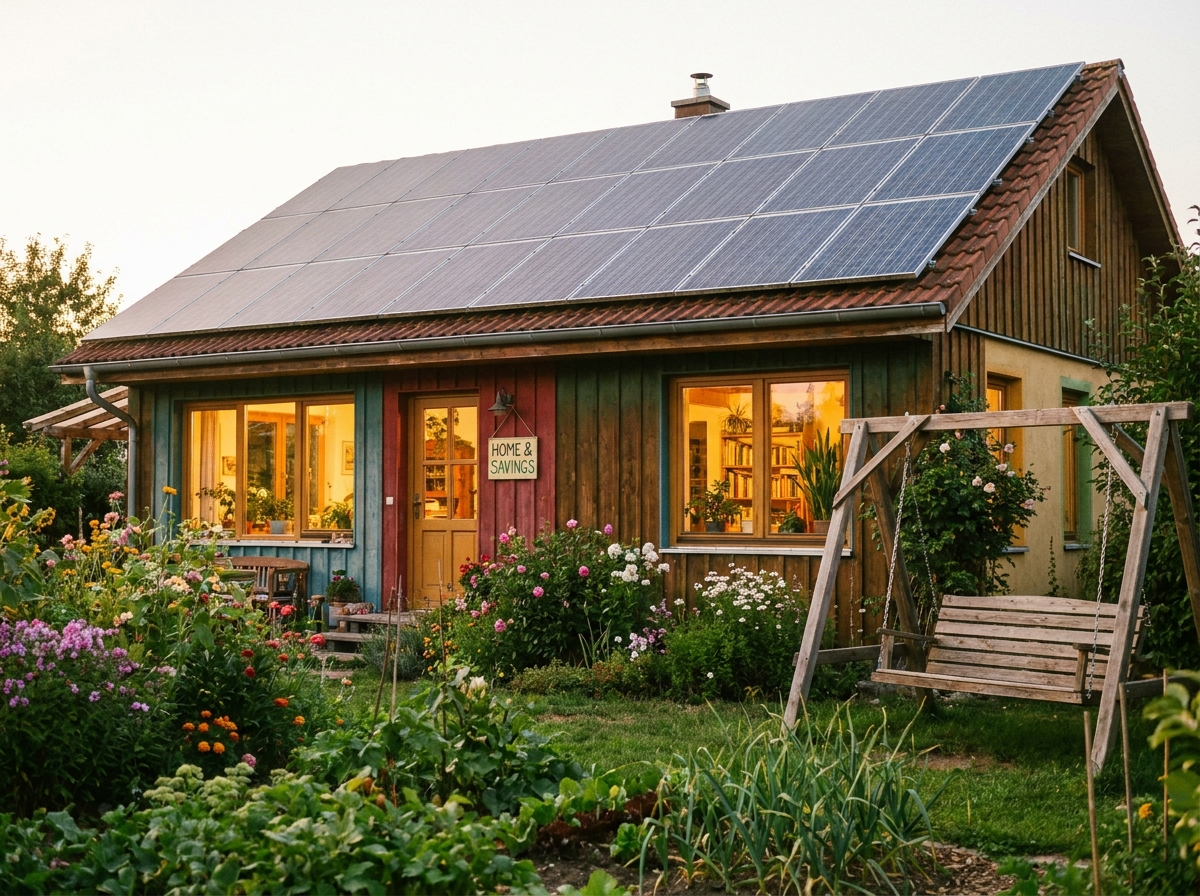
Solar financing sounds complicated, but it really comes down to three paths: you buy the system outright, you borrow money to buy it, or you sign up to have someone else own the system while you just buy the cheaper electricity it produces. Each path suits a different situation. Let us walk through them one by one.
Option 1: Cash purchase — the highest return, the most upfront
A cash purchase means you pay the full installation cost out of pocket — typically $5,000 to $15,000 for a residential system depending on size — and you own the panels outright from day one. This is the simplest arrangement and, over the long run, the most financially rewarding.
Because you are not paying interest to anyone, every dollar of electricity your system generates is pure return. Most residential systems pay back their cost in four to seven years, then generate free electricity for a further 15 to 20 years. If you have the savings and do not need that money for anything else in the near term, cash is hard to beat.
- Pros: Lowest total cost over system lifetime, immediate ownership, full access to STCs (Small-scale Technology Certificates) and government rebates, simple.
- Pros: You benefit from any increase in electricity prices from day one, and you can sell the home with panels included as an asset.
- Cons: Large amount of cash tied up upfront — opportunity cost if that money could earn returns elsewhere.
- Cons: Not practical for everyone, particularly if savings are earmarked for other goals.
Option 2: Solar loans — own the system, spread the cost
A solar loan lets you own the system (just like a cash purchase) but spread the cost over two to seven years. You pay a monthly instalment to the lender, and your monthly electricity savings usually cover a significant portion of that repayment — sometimes all of it, meaning your out-of-pocket cost each month is minimal or zero compared to what you were spending on power before.
Green loans for solar carry lower interest rates than personal loans in most cases, and several state-run schemes offer subsidised or interest-free finance for eligible households. You still receive the full government rebate (STC discount) upfront, which reduces the amount you borrow from day one.
- Pros: You own the system and all its long-term financial benefits. Equity builds as you pay down the loan.
- Pros: Monthly repayments are often offset by electricity savings, making the net cost feel small.
- Pros: Access to government rebates reduces loan principal immediately.
- Cons: You are taking on debt. If interest rates rise or your usage drops, the savings may not fully cover repayments.
- Cons: Your credit score and borrowing history affect what rates you qualify for.
When comparing loans, always look at the total amount repaid over the full term, not just the monthly payment. A longer term means smaller repayments but more interest paid overall. We help you model this so the comparison is apples to apples.
Option 3: Power Purchase Agreement (PPA) — $0 upfront, just cheaper electricity
A PPA is a fundamentally different arrangement. Instead of buying the solar system, you sign a contract that lets a third-party financier own and install panels on your roof. You pay nothing upfront. In return, you agree to buy the electricity those panels produce at a rate that is lower than the grid tariff — typically 10 to 20% below what you currently pay.
The financier earns their return over the contract period (usually 10 to 25 years) through the stream of electricity payments you make. At the end of the term, you typically have the option to extend the agreement, have the system removed, or purchase the equipment at fair market value (often close to zero at that point).
- Pros: Genuinely $0 upfront — no loan, no savings required. Perfect if you want lower bills now.
- Pros: The system is maintained by the provider at no cost to you — faults, cleaning, and monitoring are their responsibility.
- Pros: If the system underperforms, you simply draw the shortfall from the grid at your normal rate.
- Cons: You do not own the system, so you miss out on the long-term equity and the full benefit of rising electricity prices.
- Cons: The PPA is tied to the property — selling your home requires either transferring the agreement to the buyer or buying out the contract early.
- Cons: Over a 20-year term, your total payments to the PPA provider may exceed what the system would have cost to buy outright.
Photon's tip: PPAs are brilliant for renters in commercial premises (think small businesses that do not own their building) and for households who cannot access finance but want lower bills now. For homeowners with any capacity to borrow, a solar loan almost always delivers a better financial outcome over time.
How PPAs work in practice
Here is a simple example. Say your current electricity rate is 30 cents per kilowatt-hour (c/kWh). Under a PPA, you might pay 24 c/kWh for the electricity your panels produce. Any electricity you draw from the grid during the night or on cloudy days still comes at your normal grid rate. The PPA provider monitors the system remotely and handles all maintenance — you just get a lower bill.
PPA rates are often fixed or index-linked (rising by a small percentage each year, typically 1 to 3%). That index escalator matters — over 20 years, even a modest annual rise compounds. Always ask to see the full payment schedule before signing.
Battery financing — the same options apply
Everything above applies equally to battery storage. You can pay cash, take a loan, or — increasingly — sign a Virtual Power Plant (VPP) agreement where the battery is provided free in exchange for the provider being able to dispatch your stored energy into the grid during peak events. VPP agreements are structurally similar to PPAs and the same pros and cons apply.
Government rebates and incentives — do not leave money on the table
Regardless of which financing path you choose, most Australian households and businesses are entitled to Small-scale Technology Certificates (STCs), which are a federal government incentive that effectively discounts the upfront cost of your system by $1,500 to $4,000 depending on your location and system size. Reputable installers — including all SolBuddy partners — apply this discount automatically at point of sale, so you never have to claim it yourself.
State-level rebates and interest-free loan schemes are additional and change frequently. Queensland, Victoria, South Australia, and the ACT all currently run programs worth $1,000 to $4,500 for eligible households. We keep our rebate database current and will tell you exactly what you qualify for before you commit to anything.
Frequently asked questions
What is the difference between a PPA and a solar lease?
In a PPA you pay per kilowatt-hour of electricity produced — so your bill varies with sunshine. In a solar lease you pay a fixed monthly rental regardless of output. PPAs are now far more common in Australia because they align the provider's incentive with actually making the system perform.
Can I still get the government STC rebate if I use a PPA?
No. Because the provider owns the system under a PPA, they claim the STCs — that is part of how they fund the installation at no cost to you. This is one reason why the long-term economics of ownership (cash or loan) tend to beat a PPA for most homeowners.
What happens to my PPA if I sell my house?
Most PPA contracts allow transfer to the new owner, but the buyer needs to agree to take on the agreement. This can sometimes complicate a sale, particularly if the buyer wants to finance their purchase and the lender has concerns about the encumbrance. Always disclose the PPA to your conveyancer early in a sale process.
Are green solar loans better than a regular personal loan?
Usually yes. Green or sustainability-linked loan products from banks and credit unions frequently carry lower interest rates than unsecured personal loans — sometimes by two to three percentage points. They are worth seeking out specifically. We can point you to current offers from lenders we work with.
How long does solar loan approval take?
Most lenders provide conditional approval within 24 to 48 hours for amounts under $20,000. Full approval and funds disbursement typically happen within five to seven business days. We can start the installation process as soon as conditional approval is in place.
Let's go solar
Ready to make friends with the sun?
Get a free, no-pressure quote and a clear plan. Photon will walk you through every step — no jargon, promise.