Home / Services / REC & Certificate Brokerage
REC & Certificate Brokerage
Your clean energy earns real certificates and real cash
Every megawatt-hour of clean electricity your solar system produces is worth more than just a lower power bill. Under Australia's Renewable Energy Target, that generation creates financial certificates — STCs for small systems, LGCs for large ones — that can be sold to businesses that are legally required to buy them. SolBuddy brokerage service makes sure you claim every certificate you are entitled to and get a fair price for them.
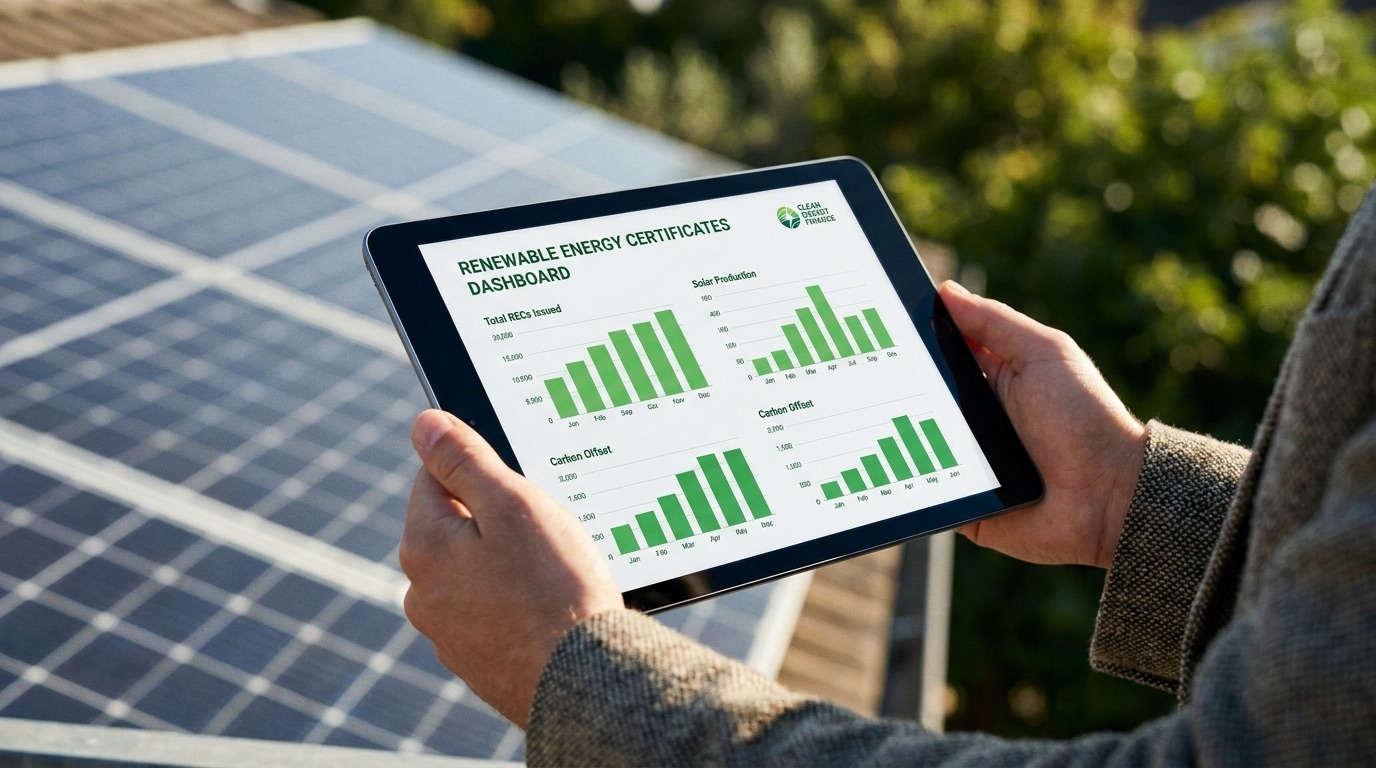
When you install a solar system, you are doing something genuinely valuable for the environment — replacing dirty grid power with clean, zero-emissions electricity. Australia's Renewable Energy Target (RET) was designed to put a financial value on exactly that contribution, and it does so through a system of tradeable certificates called Renewable Energy Certificates, or RECs. These certificates can be sold to large energy users and corporations that are legally required to surrender them to prove they have supported renewable generation.
The practical upshot is that your solar investment earns you two streams of value: lower electricity bills and saleable certificates. Most small solar customers assign their certificates to their installer at the point of sale in exchange for an upfront discount — that is what the STC rebate you hear about actually is. But larger systems, and systems enrolled in certain programs, can earn ongoing certificates over many years. SolBuddy's brokerage service helps you navigate both scenarios and ensures you never leave money on the table.
STCs — Small-scale Technology Certificates
STCs (Small-scale Technology Certificates) are created at the time a small solar, wind, or hot-water system is installed. A 6.6 kW solar system in Brisbane, for example, might generate around 80 STCs based on the system's estimated generation over a deeming period extending to 2030. Each STC has a market value that currently sits close to the $40 government-set price, meaning those 80 certificates are worth roughly $3,200. This is why your solar quotes show a government rebate built in — the installer is purchasing your STCs from you upfront and claiming the value themselves.
SolBuddy registers your system in the Clean Energy Regulator's REC Registry, creates the STCs on your behalf, and either assigns them to reduce your installation cost or trades them on the open market if you prefer to retain ownership and sell at the best available price. For systems installed under the STC scheme, this is handled as a seamless part of your installation — no separate action needed from you.
LGCs — Large-scale Generation Certificates
Large-scale Generation Certificates (LGCs) work differently. They are earned on an ongoing basis — one LGC for every megawatt-hour of eligible renewable electricity generated by an accredited power station. In the RET framework, a solar farm, a wind farm, or a large commercial rooftop system (typically over 100 kW) can be accredited as a power station and earn LGCs continuously throughout its operating life.
- Accreditation — SolBuddy registers your large system with the Clean Energy Regulator as an accredited power station under the Large-scale Renewable Energy Target (LRET).
- Metering — an AEMO-compliant revenue-grade meter records generation in 30-minute intervals, providing the verified data the REC Registry requires.
- Certificate creation — LGCs are created quarterly based on metered generation data and lodged into the REC Registry.
- Market sale — SolBuddy brokers the sale of your LGCs to liable electricity retailers, energy retailers, and direct corporate buyers seeking to meet their renewable obligations.
- Settlement — proceeds are paid to you typically within 30 days of trade settlement, providing a consistent revenue stream throughout the system's life.
Photon's tip: LGC prices fluctuate with supply and demand — in some years they trade at $30 to $35, in others closer to $60. SolBuddy monitors the market and can help you decide whether to sell spot or forward-contract your certificates for price certainty over one to three years.
Who buys these certificates and why?
Large electricity retailers, industrial energy users, and corporations with voluntary renewable commitments are all buyers of RECs. Electricity retailers are legally required under the Renewable Energy Target to surrender a set number of LGCs each year proportional to the electricity they sell — this is their 'renewable energy obligation.' Corporations buying LGCs voluntarily are typically seeking to claim 100 percent renewable electricity for sustainability reporting, carbon offsetting, or meeting Science Based Targets. This dual demand from compliance buyers and voluntary buyers keeps the certificate market liquid and prices competitive.
Green Power and GreenPower accreditation
If your business generates solar electricity that it wants to count toward a GreenPower accreditation claim — allowing you to market your products or services as powered by certified renewable energy — that process also runs through the REC Registry and requires verified metering and accreditation. SolBuddy can guide businesses through the GreenPower accreditation pathway alongside their LGC trading program, creating a coherent renewable energy story for marketing and ESG reporting.
Small systems — making sure you get your STC discount
For residential and small commercial systems under 100 kW, the main action is ensuring your installer correctly registers your system and creates the full entitlement of STCs. Errors in system size, installation postcode, or commissioning date can reduce your STC count. SolBuddy double-checks every registration before lodging to the Clean Energy Regulator, and if you have an older system whose STCs were never properly registered, we can investigate whether a retrospective claim is possible.
Renewable energy certificates are one of the lesser-understood benefits of going solar, but they represent thousands of dollars in value over the life of a system. SolBuddy's brokerage team speaks fluent REC — let us make sure yours are fully counted and properly valued.
Frequently asked questions
What is the difference between an STC and an LGC?
STCs are created upfront for small systems (under 100 kW) and represent the estimated future generation over a deeming period. LGCs are created on an ongoing basis for large accredited systems and represent actual measured generation — one LGC per megawatt-hour generated. Both are tradeable on the same REC Registry platform but serve different parts of the Renewable Energy Target.
Can I get my STC rebate as cash instead of a discount on my installation?
Yes, though it requires more paperwork. Instead of assigning your STCs to the installer, you retain ownership, create them in the REC Registry yourself (or have SolBuddy do it), and sell them through a broker. The market price may differ slightly from the installer's assumed value, up or down. SolBuddy can advise whether retaining STCs makes financial sense for your system size.
My solar system is three years old — have I already received all my STC value?
If your installer claimed STCs on your behalf as part of your purchase price discount (the standard approach), then yes — those certificates were already factored into your upfront cost. If your system was installed under an unusual arrangement or the STCs were never registered, SolBuddy can investigate. LGC eligibility for systems over 100 kW is ongoing regardless of when the system was installed, as long as the accreditation is maintained.
How does SolBuddy get paid for brokerage services?
SolBuddy takes a small brokerage margin on LGC trades — typically one to two dollars per certificate — and earns nothing on STC administration, which is included as part of our standard installation service. We will always disclose our fee structure upfront and show you the net price you receive per certificate before any trade is executed.
Let's go solar
Ready to make friends with the sun?
Get a free, no-pressure quote and a clear plan. Photon will walk you through every step — no jargon, promise.