EV Charging
Charge smarter at home — pay cents, not dollars.
Got an electric vehicle — or thinking about getting one? A home EV charger paired with your solar system is one of the best financial decisions you can make as a car owner. We make the whole thing straightforward, from choosing the right charger to connecting it to your solar feed.
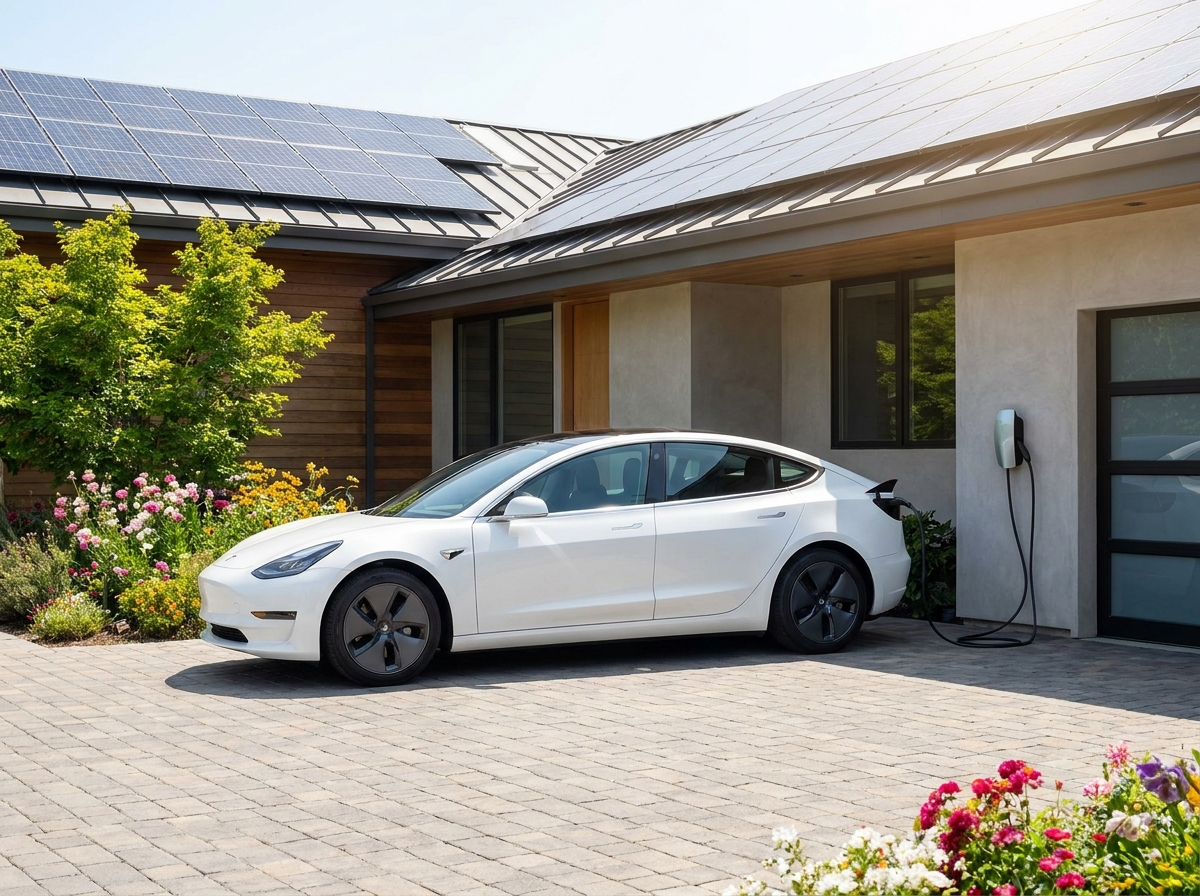
Public charging is fine in a pinch, but home charging is where the real savings live. When you charge overnight on off-peak tariffs — or better still, straight from your rooftop solar during the day — you can push your cost per kilometre well below what petrol ever managed. We design and install Level 2 AC home chargers that let you wake up every morning to a full battery without giving it a second thought.
SolBuddy supplies and installs wallbox chargers from trusted brands including Zappi, Wallbox Pulsar, and myenergi — all fully compliant with Australian electrical standards. Our licensed electricians handle the switchboard assessment, earthing, cable runs, and final commissioning so nothing is left to chance. Most residential installs wrap up in three to five hours.
How does home charging actually work?
Your EV charger plugs into a dedicated circuit on your home's switchboard. A Level 2 wallbox delivers 7 kW to 22 kW of AC power — charging a typical family EV (60–80 kWh battery) from near-empty overnight at 7 kW, or in as little as four hours at higher power. The charger communicates with your car's onboard computer to deliver exactly the right current safely.
If you already have solar, a smart charger like the Zappi can actively divert excess solar generation straight into your car rather than exporting it to the grid for a low feed-in tariff. That means the energy your panels produce during the day goes into your wheels instead of paying you 5–8 cents per kilowatt-hour on your bill. Charged on solar, your driving fuel cost can drop to effectively zero.
Solar + EV: the combination that changes everything
An EV and a solar system together form a virtuous loop. Your panels offset your home's electricity use and your car's fuel cost simultaneously. Add a battery and you can store solar energy generated at midday and use it to charge the car in the evening — meaning every kilometre you drive is powered by sunshine, regardless of what the grid is doing.
- Solar diversion chargers push excess solar directly into your EV battery rather than exporting it
- Smart scheduling lets you charge automatically during the cheapest off-peak tariff windows
- Vehicle-to-Home (V2H) capable chargers (where supported by your EV) can feed stored EV energy back to your house during peak times
- Real-time app monitoring shows exactly how much solar energy has gone into the car each day
- A single combined solar + EV charger quote from SolBuddy keeps the process clean and the warranty simple
Photon's tip: if your EV supports scheduled charging, set it to start at your off-peak rate window — typically 10 pm to 7 am — and you'll slash your charging cost even without solar diversion.
What charger power level do you actually need?
Most households are perfectly served by a 7 kW single-phase wallbox. If you have a three-phase supply — common in newer homes and larger properties — you can step up to an 11 kW or 22 kW unit for faster top-ups. The right choice depends on how far you drive each day, whether you have one or two EVs, and your home's switchboard capacity. We'll assess all of this before recommending anything.
Installation process: what to expect
We start with a free site assessment — checking your switchboard, the available cable run to your preferred charger location, and whether any upgrades are needed. From there we provide a fixed-price quote with no surprises. On installation day, our electrician will mount the wallbox (garage wall, carport post, or exterior wall), run conduit and cable, connect to a dedicated circuit breaker, test the unit, and walk you through the app. The whole job typically takes three to five hours. We handle all compliance certificates and paperwork.
Costs and rebates
A quality home EV charger supply-and-install typically sits between $1,200 and $2,500 depending on the unit, cable run length, and whether switchboard work is needed. Some state programs and energy retailers offer rebates or interest-free loans for EV chargers — we'll flag any that apply to your address at quote time. When you factor in the fuel savings, most customers see payback in two to four years, and the charger keeps delivering value for the entire life of the car.
Electric motoring is already cheaper to run than petrol — a home charger simply makes it cheaper still. Whether you drive a Tesla, a BYD, a Hyundai IONIQ, or a Nissan Leaf, we can match you to the right charger and make sure it works beautifully with your solar system from day one.
Frequently asked questions
Can I install a home EV charger without solar panels?
Absolutely. A wallbox charger works perfectly on grid power alone. You'll still save compared to public fast-charging, especially if you use off-peak tariffs. Adding solar later is straightforward — we design the installation with future expansion in mind.
Does my switchboard need to be upgraded?
It depends on your switchboard's age and available capacity. Older ceramic-fuse boards generally need upgrading before we can add a dedicated EV circuit. We check this during the free site assessment and include any required switchboard work in your quote upfront so there are no surprises on the day.
What happens to my EV charger if there is a blackout?
A standard grid-tied EV charger stops during a blackout for safety reasons — the same as your solar inverter. If you have a battery with backup capability and a compatible charger, you may be able to keep charging during an outage. We can advise on which charger and battery combinations support this if it is important to you.
How long does a full charge take at home?
At 7 kW (the most common home charger output), a 60 kWh battery charges from 20% to 80% in roughly six hours — overnight is usually plenty for most daily commuters. At 11 kW that drops to around four hours. We'll help you calculate the right charger speed based on how you actually use your car.
Will my energy retailer charge me more because I have an EV?
No — your retailer bills you by kilowatt-hours consumed, not by what device used them. In fact, many retailers now offer dedicated EV tariffs with cheaper overnight rates. We can recommend energy plans that pair well with home EV charging in your state.
Let's go solar
Ready to make friends with the sun?
Get a free, no-pressure quote and a clear plan. Photon will walk you through every step — no jargon, promise.