Home / Services / Heat Pumps & Electrification
Heat Pumps & Electrification
Say goodbye to gas bills and hello to clean comfort
Electrification means replacing the gas appliances in your home — heaters, hot-water systems, cooktops — with efficient electric alternatives powered by your solar panels. Heat pumps are the star of the show: they deliver two to four units of heat for every unit of electricity they consume, making them dramatically cheaper to run than gas, and essentially free when your solar is generating.
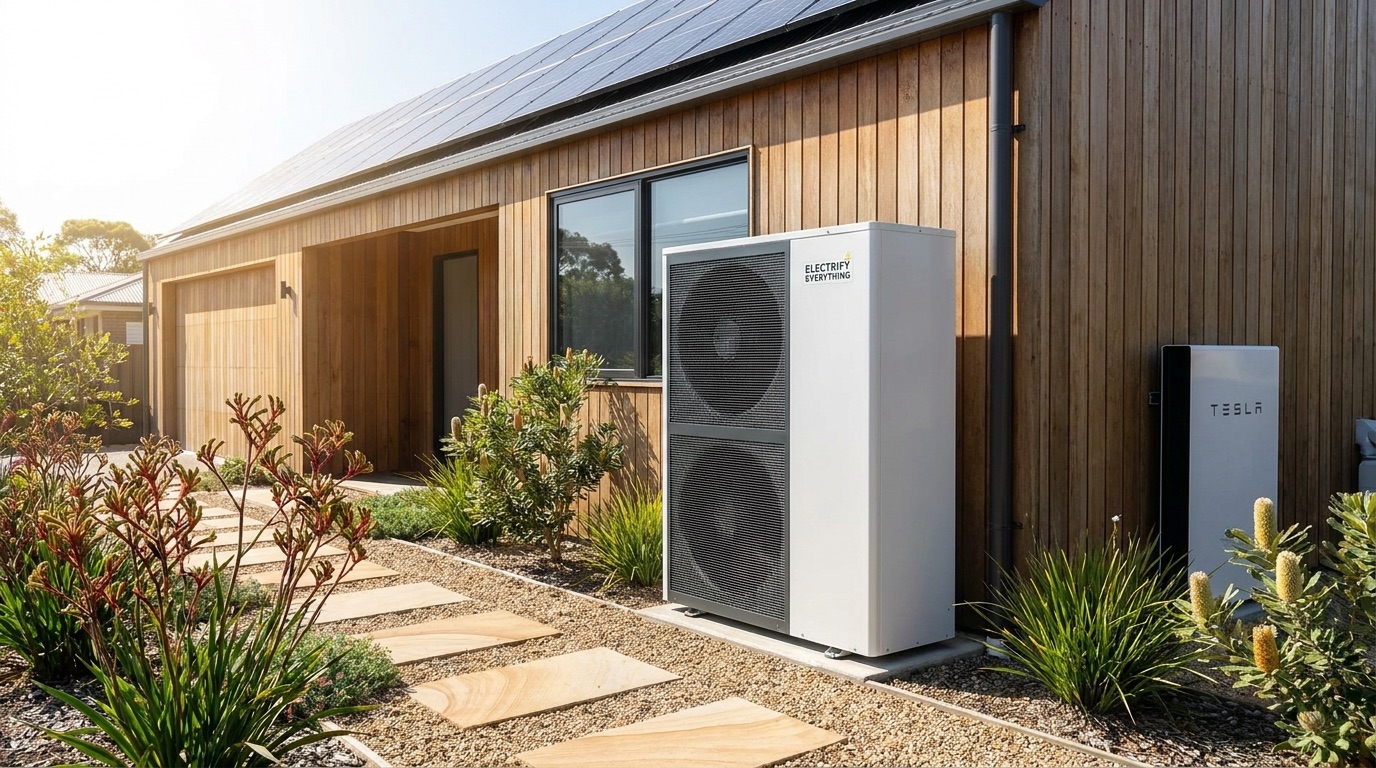
If you have ever stared at a gas bill and wondered why heating your home costs so much, the answer lies in how gas appliances work. A gas heater or hot-water system converts fuel to heat at roughly 80 to 90 percent efficiency — meaning you lose some energy as waste heat no matter what. A heat pump works differently: it does not generate heat, it moves heat from the outside air (or the ground) into your home. That process is so efficient that for every kilowatt of electricity consumed, a good heat pump delivers three to four kilowatts of useful heating or hot water.
Now pair that efficiency with a rooftop solar system. On a sunny day, your panels are generating electricity at near-zero cost. A heat pump hot-water system running on that free daytime solar power gives you a full tank of hot water for almost nothing. SolBuddy helps you plan the full electrification picture — not just one appliance, but your whole home — so every upgrade works together and the savings stack up.
What does electrification actually mean?
Electrification simply means moving away from burning gas (or bottled LP gas) in your home and replacing those appliances with electric ones. The key is choosing the right electric appliances — not old-fashioned resistive heaters that are expensive to run, but modern heat-pump technology that multiplies every unit of electricity into three or four units of warmth. Done well, electrification lowers your energy bills, improves indoor air quality, and dramatically reduces your household's carbon footprint.
The three big switches
- Hot water — a heat-pump hot-water system replaces your gas storage or instantaneous unit. It uses ambient air heat to warm water and can be programmed to run during peak solar hours, cutting running costs by up to 75 percent compared with gas.
- Space heating and cooling — a reverse-cycle split-system air conditioner is a heat pump that both heats in winter and cools in summer. Modern inverter models achieve CoP ratings of 4 or higher, meaning they are four times as efficient as a direct electric heater.
- Cooktop — induction cooktops heat food faster than gas, use no combustion, produce no indoor nitrogen dioxide, and are far easier to clean. Paired with solar, they cost next to nothing to run during the day.
Photon's tip: program your heat-pump hot-water system to heat between 10 am and 2 pm — that is when your solar panels are producing the most power and the ambient air temperature is warmest, making the heat pump even more efficient.
Indoor air quality — an often-overlooked benefit
Gas appliances produce combustion by-products including nitrogen dioxide and carbon monoxide, even when operating correctly. Research from the Australian National University and other institutions links gas cooktop use to elevated indoor NO2 levels that can trigger or worsen asthma, particularly in children. Electrification eliminates indoor combustion entirely. The air in your home simply becomes cleaner, and that benefit starts on day one.
Does my solar system need to be bigger?
It depends on what you are replacing and how you use it. A heat-pump hot-water system typically draws 1 to 2 kW for two to three hours per day. A reverse-cycle air conditioner might draw 2 to 4 kW when running. SolBuddy models your current solar generation against your new electric appliance loads before recommending anything. Sometimes your existing panels are already more than adequate. In other cases, adding a few extra panels — which are cheaper per watt than ever — makes the economics of full electrification even better.
Rebates and incentives available right now
Heat-pump hot-water systems generate Small-scale Technology Certificates (STCs) under the federal Renewable Energy Target, reducing the purchase price by hundreds to over a thousand dollars depending on your climate zone and the system size. Several state governments also offer additional rebates — Victoria's Solar Homes program, South Australia's Home Battery Scheme upgrade pathways, and Queensland's energy rebates all have provisions that overlap with electrification. SolBuddy lodges all STC paperwork on your behalf and ensures you capture every dollar you are entitled to.
Switching off gas is one of the most impactful things an Australian household can do — for the budget, for comfort, and for the climate. Let SolBuddy design a staged plan that makes the transition simple, affordable, and genuinely rewarding.
Frequently asked questions
Do heat pumps work in cold climates like Canberra or the Blue Mountains?
Yes. Modern heat pumps are rated to extract heat from air as cold as minus 15 degrees Celsius, making them effective even in alpine Australian climates. Cold-climate models are specifically designed for these conditions and SolBuddy will recommend the right specification for your location.
How long does a heat-pump hot-water system last?
Quality units typically last 10 to 15 years, comparable to a good gas storage system. The compressor is the main moving part and it runs for relatively short periods each day, contributing to good longevity. Most units carry a five-year manufacturer warranty on the heat-pump components.
Can I keep one gas appliance and electrify the rest?
Absolutely — electrification is a journey, not an overnight switch. Many households start with hot water (highest savings, strong rebates) and replace other gas appliances as they come up for renewal. SolBuddy will map out a phased plan that makes financial sense for your situation.
Will removing the gas connection save me money on fixed charges?
Yes. Once you disconnect from the gas network you eliminate the daily supply charge, which in most Australian states runs between 80 cents and $1.20 per day — roughly $300 to $440 per year — before you use a single unit of gas. That fixed saving alone can significantly improve the payback on your electrification investment.
Let's go solar
Ready to make friends with the sun?
Get a free, no-pressure quote and a clear plan. Photon will walk you through every step — no jargon, promise.